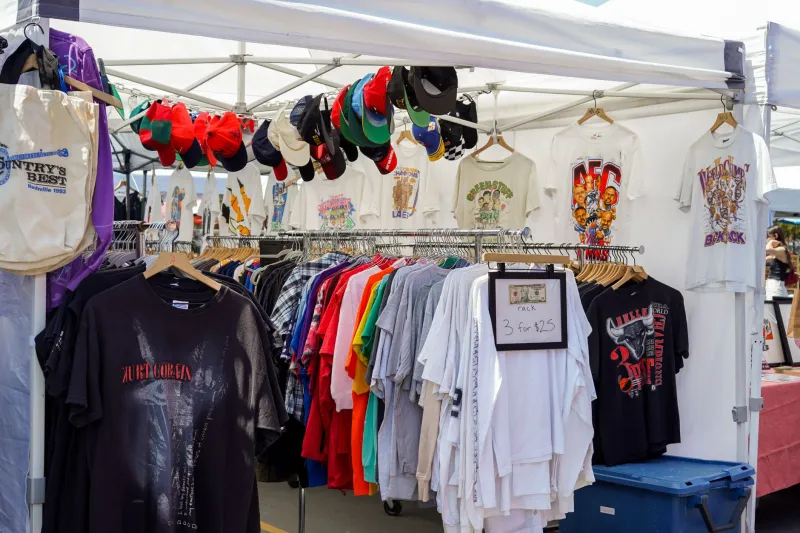
The Tee That Travels: How Band Shirts Conquered the American Wardrobe

The Shirt That Started It All
There's something almost radical about a band tee. It's not trying to be anything other than exactly what it is — a declaration of taste, a piece of music history you can actually wear. While fast fashion churns out trend-chasing pieces that feel disposable by next season, a vintage Ramones shirt or a worn-in Neutral Milk Hotel tee from a decade-old tour carries weight that no algorithm can manufacture.
But how did we get here? How did a piece of merch that was once exclusively the domain of die-hard fans at sweaty club shows end up on the covers of style magazines and in the rotation of the most culturally plugged-in people in the country?
The answer, like most good stories, starts with rock and roll.
Arena Roots: The 1970s and the Birth of Tour Merch
Band merchandise as we know it really took off in the early 1970s, when major rock acts like Led Zeppelin, The Rolling Stones, and Aerosmith started treating their tours like full-scale commercial operations. The t-shirt became a practical solution to a real demand — fans wanted something tangible to take home from an experience that felt almost spiritual. A shirt was proof of presence.
Those early designs were bold, unapologetic, and often a little rough around the edges — which, honestly, made them more iconic. The bootleg market that sprung up around them only reinforced the idea that these shirts had value beyond their cotton and ink. People were literally risking legal trouble to own one.
By the 1980s, metal and punk scenes pushed band merch into even more expressive territory. A Misfits skull tee wasn't just clothing — it was a signal to other people in the know. A membership card with no dues and no gatekeeping beyond genuine love for the music.
When Fashion Came Knocking
The crossover moment happened gradually, then all at once. By the early 2000s, stylists started pulling vintage band tees for editorial shoots. Celebrity sightings in faded Sabbath shirts or oversized Nirvana tees became a recurring tabloid moment. What had been subcultural shorthand was suddenly being decoded by the mainstream.
Here's where things get interesting — and a little complicated. When mass-market retailers started producing their own "band tees" featuring artists like The Doors or Joy Division without meaningful ties to the music or the fan communities, something felt off. The shirts looked the part, but they were hollow. Fashion borrowed the aesthetic without the story.
That tension actually ended up doing something useful for indie and alternative band merch specifically: it clarified the difference between wearing a shirt because you love the music and wearing one because it looks cool on a rack. Fans of underground and independent artists became more protective of that distinction, and rightfully so.
Why Indie and Alternative Merch Hits Different
There's an authenticity gap between a band tee from a major label cash machine and one you picked up at a 300-capacity venue after watching an artist pour everything they had into a set. The indie and alternative space understands this instinctively.
Smaller artists often collaborate directly with visual artists, illustrators, and designers from their own communities. The result is merch that functions as genuine art — limited in quantity, specific in reference, and deeply tied to a particular moment in a band's story. Buying it means something. It's a direct line between fan and artist, with no corporate intermediary taking a cut of the cultural meaning.
At B&D Store, that's exactly the energy we're drawn to. Wear the Music isn't just a tagline — it's the whole point.
How to Actually Style a Band Tee in 2025
Okay, let's get practical. The band tee is genuinely one of the most versatile pieces you can own, and here's how to make it work across different contexts without losing the plot.
Keep it effortlessly casual. An oversized indie band tee tucked loosely into high-waisted straight-leg jeans with white leather sneakers is essentially a perfect outfit. Don't overthink it. The shirt does the heavy lifting.
Layer it up. A fitted long-sleeve underneath a vintage-style band tee, paired with a chore coat or a worn-in flannel, is the kind of look that reads as intentional without screaming "I tried." This works especially well for fall shows or weekend hangs.
Dress it up — seriously. Blazer over a band tee, tailored trousers, Chelsea boots. Fashion editors have been doing this for years and they're not wrong. It creates a contrast that feels genuinely modern and a little subversive.
Knot it, crop it, tuck it. A front tuck into a midi skirt with chunky boots is a whole vibe. The graphic on the shirt becomes a focal point rather than just background noise.
Pieces Worth Adding to Your Rotation
If you're building out a wardrobe that says something real, here's what to look for:
- Oversized graphic tees from artists who design their own artwork or commission independent illustrators. The visual language matters.
- Tour-specific shirts that reference a particular album cycle or venue — these age beautifully and become more interesting over time.
- Limited-run collaborative pieces where a band has worked with a visual artist or streetwear brand to create something genuinely collectible.
- Vintage-wash basics that feel like they've already lived a little. New merch that's designed to look worn-in has a different energy than something stiff off the rack.
The Cultural Statement You're Already Making
Here's the thing about band tees that nobody really talks about: they're one of the few pieces of clothing that function as a genuine conversation starter. Put on a Snail Mail tee at a coffee shop and someone who loves Snail Mail will find you. That's not an accident — it's community building through clothing.
In a fashion landscape increasingly dominated by logos that exist purely to signal wealth or brand loyalty, a band tee signals something more personal. It says: here's what moves me. Here's where I was on a Tuesday night in a dark room when something clicked.
And that, more than any trend cycle or styling tip, is why band merch has earned its permanent place in the American wardrobe. It's not just what you wear. It's who you are when the music's playing.