The Table at the Back Isn’t Dead — It Just Got a Promotion
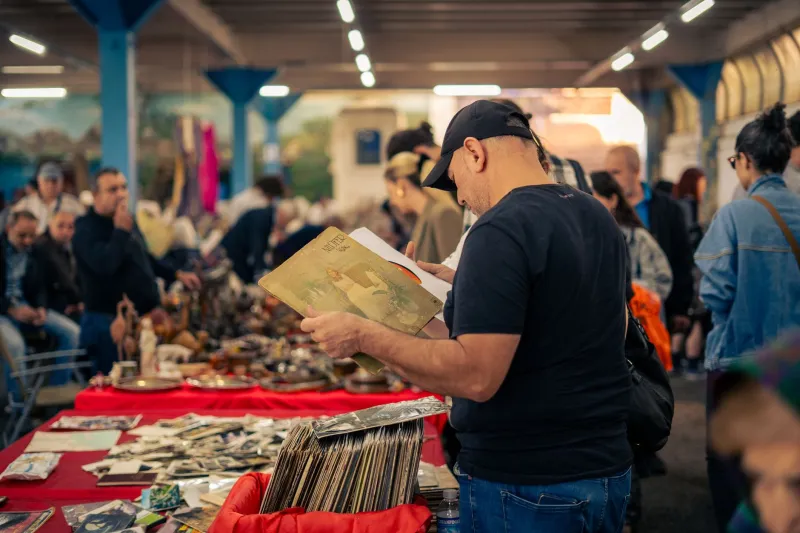
On a Thursday night in September, I stood at the back of a 180-cap room in Cleveland and watched a tour manager named Dani duct-tape a laminated QR code to the edge of a folding table. She had eight minutes before doors. The code pointed to a page with three things on it: the tour tee in every size, a $12 zine the band had printed at a copy shop that morning, and a text-message signup that promised first crack at a limited pressing of the new 7-inch.
By the time the headliner went on, forty-one people had scanned it. Eleven bought something on their phones while standing six feet from a table that had the exact same shirt folded on it.
“People think that means the table is pointless,” Dani told me, restocking a stack of mediums. “It means the table is doing its job. It got them to open the link.”
The folding table never left
Here’s the thing nobody says out loud: the merch table didn’t decline. It got demoted — by artists, not by fans.
I’ve spent the last several months asking small-tour people the same question: what happens at your table? The answers are remarkably consistent. The table still sells. It still converts. What changed is that it stopped being a cash register and became a front door — a physical place where a fan decides whether this band is a one-night thing or a five-year relationship.
That reframing matters, because it changes what you put on the table. If the job is transactions, you optimize for speed and cash. If the job is capture, you optimize for discovery, sizing, and a reason to stay in touch after the house lights come up.
Tap-to-pay killed the last excuse
For years, the cash-only table was a charming inconvenience that quietly cost bands thousands. In 2026 that excuse is gone. A $49 card reader and a phone will out-sell a cash box every single night, and the artists who figured that out early are not shy about the numbers.
Marcus, who plays guitar in a Pittsburgh four-piece that tours in a hatchback, put it bluntly: “We took cash only on our first run. We came home with a bag of ones and a bunch of people who wanted to buy a hoodie and couldn’t. That’s not a fan problem. That’s a us problem.”
His band now runs a reader, a QR code for the online store, and a clipboard with a plain-text email list. No tablet dashboards, no complicated funnels. Just a way for a stranger to hand over money or a way to reach them later.
The three mistakes that keep showing up
Across maybe two dozen conversations, the same three failures came up again and again — and none of them had anything to do with the internet.
The table is unstaffed during the headliner. This is the classic. The opener plays, the band packs up, and the table sits empty while 200 people file past it on the way to the door. Set times are not sacred. Leave someone there.
Nobody explains anything. A pile of shirts with no sizes visible, no prices, no signage. Fans do not want to interrogate a stranger about a size run. Label it. Price it. Say what the zine is.
No post-show plan. A table with no follow-up is a vending machine. The bands who win are the ones who tell the room, from the stage, that there’s a link, and that the link goes away in a week.
Staff it like it’s the show
Dani’s rule is simple: the person working the table is the second-most important person in the room after whoever is singing. They should be able to talk about the record, know the size run, and be genuinely nice to a 19-year-old who’s nervous about asking a question.
That’s not a small ask. It’s also cheap. Pay a friend. Trade a shirt. Buy them a burrito. Rotate the job so nobody has to miss the whole set.
And if you can only afford to print one thing, print a card with a QR code and a line that reads: This doesn’t expire. We’ll be back.
The post-show drop is the second set
Here’s the part that genuinely changed in the last couple of years. The online drop after the show isn’t competing with the table. It’s the encore.
A band playing Atlanta on a Tuesday can sell 20 shirts in the room and 30 more in the 72 hours after, if they actually announce it. That’s not cannibalizing merch sales — most of those post-show buyers never made it to the table, went home and regretted it, or discovered the band from a friend’s story the next morning.
The artists getting this right treat the tour as a content engine. Every stop produces photos, a shirt with a city name on it, a short video of the crowd singing. The table starts the conversation. The follow-up finishes it.
What a good table looks like in 2026
Strip away the jargon and it comes down to a handful of things:
- A readable price list, taped down, no guessing.
- Sizes labeled and a fit shirt out of the bag so people can touch it.
- Tap-to-pay plus one QR code that goes somewhere real.
- At least one cheap item — a zine, a patch, a sticker — that a broke fan can afford.
- A human being who is happy to be there.
- A spoken line from the stage: “The link’s live for a week. Grab it.”
None of that is revolutionary. That’s the point. The merch table didn’t die and it isn’t dying. It’s the only place in the entire night where a fan and a band are standing in the same square footage with nothing between them but a folding table and a Sharpie.
Treat it like a checkout counter and you’ll get checkout-counter results. Treat it like the first conversation of a long relationship, and it’ll pay you back for years.