Worn In, Not Worn Out: Why a Faded Band Tee Is the Most Honest Thing in American Fashion Right Now
Photo: Joe Haupt from USA, CC BY-SA 2.0, via Wikimedia Commons
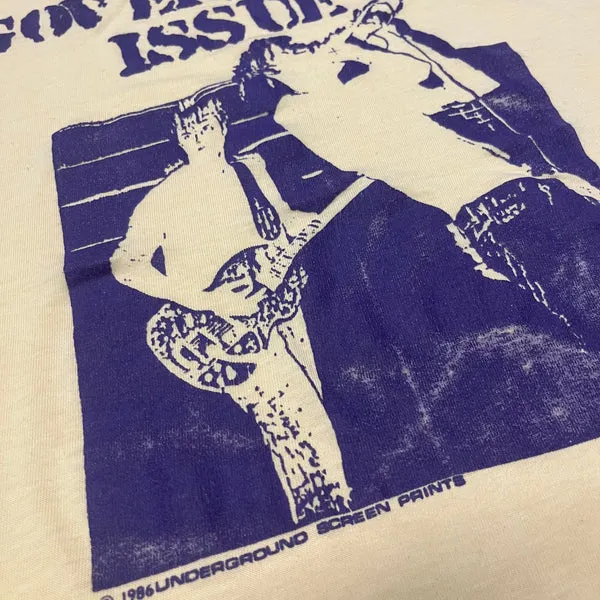
There's a shirt hanging in the back of a closet somewhere that's done more cultural work than most wardrobes combined. The collar is slightly stretched. The graphic is cracked at the edges. The color has shifted from whatever it was originally into something softer, more complicated. The person who owns it couldn't tell you the exact show it came from, but they remember the year, the venue, maybe the opening act. That shirt is a document.
And right now, that document is worth more—culturally speaking—than almost anything with a logo on it.
The Anti-Luxury Moment Band Merch Has Been Waiting For
American fashion is deep in a credibility crisis. Luxury brands have spent the last decade licensing their names onto everything from airport gift shops to fast-fashion collaborations, diluting whatever cachet the logo once carried. Streetwear, which spent years building genuine cultural roots, has been strip-mined by resellers and trend-chasers until the original community barely recognizes it. The result is a generation of consumers who are deeply, almost professionally skeptical of anything that looks like it's trying too hard.
Into that vacuum walks the band tee.
Not the pristine, unworn vintage find bought off Depop for $180. Not the H&M knockoff with a Rolling Stones tongue on it. The real thing—a shirt that proves you were somewhere, listened to something, cared enough to carry that experience on your body years later. In a fashion landscape full of performed identity, band merchandise is one of the few garments left that actually has receipts.
"It's the most honest piece of clothing you can wear," says New York-based fashion critic Delia Okonkwo, who covers subculture style for several independent publications. "It doesn't lie. Either you know the band or you don't, and people around you usually know the difference within about thirty seconds."
What the Shirt Is Actually Saying
Band merch has always functioned as a communication system among people who share a musical world. Wearing a Fugazi shirt in 1993 told people something specific about your politics, your community, your relationship to commerce and noise. Wearing a Mitski shirt in 2024 does something similar—it signals emotional range, indie credibility, a certain kind of interiority that's hard to fake.
This non-verbal language has only gotten more nuanced. Gen Z consumers, who came of age in an era of algorithmic curation and infinite content, have developed remarkably sophisticated taste radars. They can clock a surface-level fan from a genuine one based on which era of a band's catalog is represented on the shirt, whether the design is a generic logo or something pulled from a specific moment in the band's history, even how the shirt is worn.
"The gatekeeping is real and it's intentional," says Marcus Webb, a 22-year-old music fan and part-time record store employee in Austin, TX. "It's not mean-spirited—it's just that this stuff means something to us, and we can tell when someone's wearing it as a costume versus wearing it because they actually lived it."
That distinction—costume versus document—is at the center of every conversation happening around band merch and fashion authenticity right now.
The Performative Fan Problem
The mainstream fashion industry noticed band merch's cultural cachet about a decade ago, and what followed was predictable. Designer collaborations with rock estates. Fast-fashion chains printing Nirvana and Joy Division graphics onto cheap blanks. Celebrities photographed in vintage tees they clearly didn't acquire through any kind of musical fandom. The look got extracted from the context, and a lot of people in music communities felt the violation acutely.
But something interesting happened: rather than destroying the currency of band merch, the mainstream appropriation actually clarified it. The gap between wearing a shirt because you love the music and wearing one because it photographs well became more visible, not less. Genuine fans doubled down on specificity—deeper cuts, more obscure acts, older and more storied pieces.
Fashion critic and cultural commentator Jade Prescott, who splits her time between LA and Nashville, sees this as a healthy recalibration. "The knockoff version always reveals what the real thing is worth," she says. "When Urban Outfitters started selling band tees, it made the authentic ones more meaningful, not less. You just had to know where to look."
The Tee as Cultural Currency in 2024
What's striking about the current moment is how wide the conversation has gotten. Band merch isn't just being discussed in music circles anymore—it's showing up in fashion week coverage, in essays about Gen Z identity, in think pieces about post-luxury dressing. Stylists are actively sourcing vintage tour tees for editorial shoots. Costume designers on prestige TV are using band shirts as character shorthand.
And yet the thing that makes a band tee powerful is precisely that it doesn't care about any of that. It was made to be worn to a show, sweated in, thrown in the dryer, worn again. The fashion world's interest in it is entirely one-sided. The shirt doesn't need the validation.
That indifference is, paradoxically, what makes it so compelling to a generation exhausted by things that are trying too hard to be cool.
Wearing It Like You Mean It
For the fans who've always known this—who've been building their wardrobes around shows and records and communities for years—none of this is new. The band tee has always been the most honest garment in the closet. It's just that the rest of the culture is finally catching up.
At B&D Store, we've always believed that what you wear is what you believe in. The music on your chest isn't decoration—it's a declaration. And in a moment when fashion is desperate for something real, that declaration is louder than ever.