Clicks, Communities, and Chaos: How the Internet's Hidden Corners Are Minting the Next Indie Icons
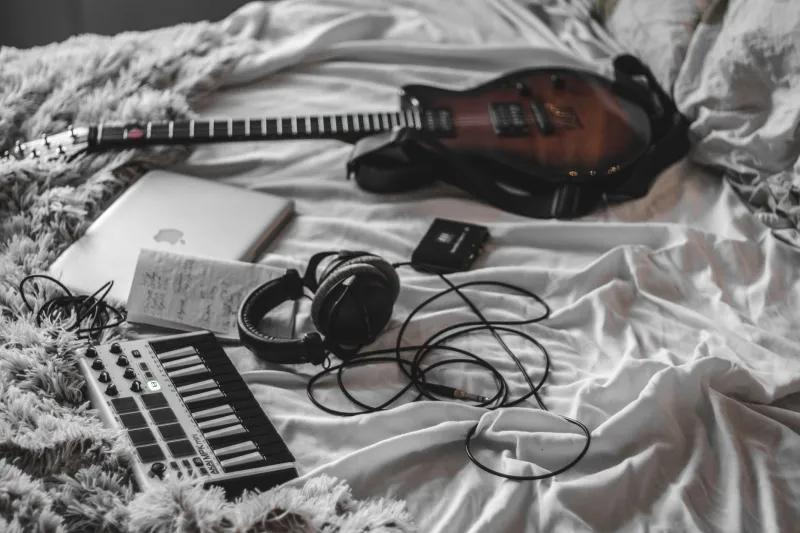
There's a moment every music obsessive knows. You're three pages deep into a Reddit thread about shoegaze production techniques, or lurking in a Discord channel dedicated to Pacific Northwest emo, and someone drops a SoundCloud link with zero context. You hit play. Forty minutes later you've listened to the whole EP twice, texted three friends, and started wondering why this artist isn't headlining every festival on the calendar.
That moment — raw, accidental, electric — is the engine behind one of the most interesting shifts in American indie music right now. The gatekeepers didn't disappear. They just got replaced by a few thousand passionate strangers on the internet.
The New A&R Department Is a Discord Server
Forget the old mythology of the label scout catching a Tuesday night show at a half-empty bar in Brooklyn. Today's talent discovery pipeline runs through channels with names like #demo-drops and #unsigned-bangers. Communities built around niche genres — hyperpop, Midwest emo revival, post-punk adjacent whatever — have become the most effective early-warning systems in music.
Take collectives like Gravel Road Sound, a loose network of fans and producers operating across Discord, Bandcamp, and Instagram. What started as a group chat among college friends sharing obscure finds has grown into a genuine launchpad. Artists who get featured in their monthly roundups routinely see streaming numbers jump overnight. More importantly, they see real people showing up.
"We're not trying to be an industry thing," says one of the collective's organizers, who goes by the handle Marzipan online. "We just love music that isn't getting attention it deserves. If an artist gets 500 new listeners because we shared their stuff, that's genuinely exciting to us. No pitch decks involved."
That grassroots credibility is exactly what makes these networks so powerful. Fans trust recommendations from communities they're already embedded in far more than they trust algorithm-generated playlists or sponsored posts. When a Discord server of 800 dedicated listeners collectively decides something is worth hearing, the enthusiasm spreads differently — more personally, more stubbornly.
Merch as Momentum: The First Real Proof of Concept
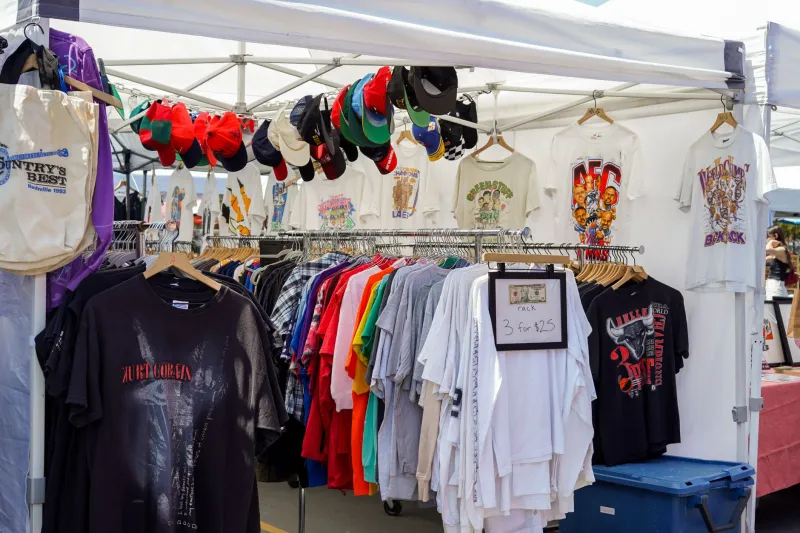
Here's something the industry is slowly waking up to: merch sales from a bedroom producer's first drop often tell you more about an artist's future than streaming numbers do. When someone buys a tee from a band with 400 monthly listeners, that's not casual fandom. That's conviction.
For emerging artists navigating these underground networks, merchandise isn't an afterthought — it's frequently the first real economic signal that something is connecting. A limited run of 50 shirts sells out in a weekend. A hand-screened hoodie gets photographed and posted, then reposted. Suddenly the visual identity of the project starts existing in physical space, worn by real people in real cities across the country.
Arizona-based artist Cleo Voss, who started releasing music under the name Pale Machinery in 2022, describes her first merch drop as a turning point. "I had maybe 1,200 followers at the time. I made 40 shirts with a friend's screen-printing setup in her garage. They were gone in three days. That told me the people who were listening were actually invested. It wasn't passive consumption."
Voss has since played Shaky Knees and been featured in three national publications. The shirts her early supporters bought are now worn to shows where the crowd knows every lyric. That early merch wasn't just revenue — it was a community forming in real time.
The Ecosystem Nobody's Mapping (But Everybody's Using)
What makes the current underground so fascinating is how deliberately decentralized it is. There's no single platform, no definitive tastemaker, no one chokepoint where attention consolidates. Instead, you get a messy, overlapping web of Bandcamp pages, TikTok micro-communities, independent music blogs that somehow still exist, local promoters with strong Instagram followings, and yes, those Discord servers.
Each node in this network operates with its own logic and its own audience. A recommendation that spreads in the Chicago DIY scene might look completely different from what's gaining traction in a Los Angeles bedroom-pop community or a Philadelphia punk collective. The diversity is the point. It means more artists can find their specific people without having to sand down their edges to appeal to everyone at once.
This matters enormously for alternative and indie music, which has always thrived on specificity — the weird little subgenre, the deeply committed niche audience, the band that isn't for everybody but is absolutely everything to the right crowd. The internet's underground networks don't flatten that. They amplify it.
From 200 Discord Members to 20,000 Festival Attendees
The trajectory isn't always linear, but the pattern is real. Artists who build genuine relationships inside these communities — who show up in the channels, respond to comments, release music directly to the people paying attention — tend to scale in ways that feel organic rather than manufactured.
And when they do break through to larger stages, those early believers come with them. The 200 Discord members become the 2,000 people at a club show who know every word. The 50 shirts become a sold-out merch table at a festival set. The community that discovered the artist before anyone else becomes the loudest section of the crowd.
For fans, that arc feels personal in a way that mainstream success stories rarely do. There's ownership in having been there early, in having bought the first shirt or shared the SoundCloud link in the group chat. That emotional investment is something no algorithm can manufacture.
Wearing the Discovery
At B&D Store, we think about this a lot. When you rep a band that hasn't blown up yet — when you're wearing the shirt before the thinkpieces get written — you're doing something that matters to the music ecosystem. You're telling the artist their work is worth something. You're signaling to everyone who notices that there's something here worth paying attention to.
The underground networks building tomorrow's indie icons run on exactly that kind of energy. Passion that translates into action. Attention that converts into support. Community that shows up, literally and figuratively.
The next headliner is out there right now, dropping demos into a Discord server, wondering if anyone's listening. Somebody is. And if history is any guide, that somebody is about to tell everybody else.
Keep your ears open. And maybe keep a little room in your wardrobe.