Dirty Floors and Loud Guitars: The Scrappy Venues That Built American Indie
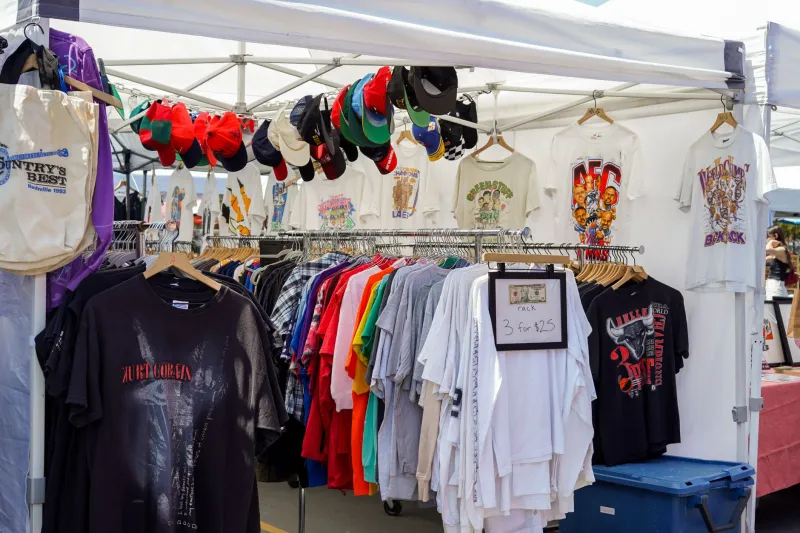
There's a reason the most iconic band tees don't look like they were designed by a marketing department. The best ones look like they were photocopied at 2 a.m. in somebody's kitchen, handed out at the door of a venue that smelled like PBR and ambition. That's because, for a huge chunk of American indie and alternative music history, they basically were.
The underground venue — the basement, the dive bar backroom, the VFW hall, the converted garage — is the original incubator of everything we love about alternative culture. Long before Spotify playlists and algorithm-driven discovery, you found your new favorite band by word of mouth, a hand-stapled flyer on a telephone pole, or by just showing up somewhere and letting the noise hit you.
We dug into the history of these spaces, talked to the people who ran them, played them, and sweated through their shirts inside them, to understand what made them so special — and why their legacy lives on in the clothes on your back.
The Basement Is the Beginning
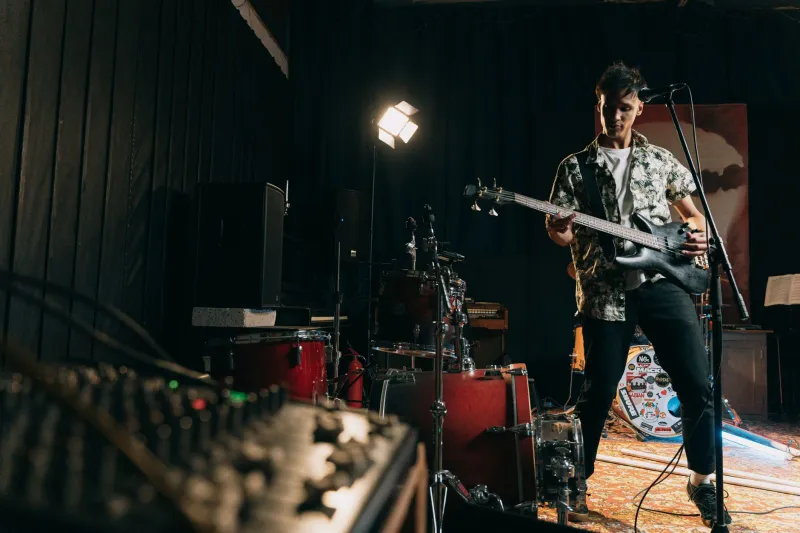
Ask almost any indie musician about their first real show and there's a decent chance the answer involves a basement. Not a rehearsal space or a proper club — a literal basement. Exposed pipes, mismatched lighting rigs, an audience of 30 people who all knew each other.
These spaces weren't glamorous, but they were free — free of gatekeepers, free of booking agents, free of the expectation that you needed to be polished before you could perform. That freedom is what allowed entire regional scenes to develop their own identities. The Boston hardcore scene, the Richmond, Virginia punk underground, the Pacific Northwest indie explosion of the early '90s — all of them had basements and makeshift DIY spaces at their roots.
"The basement show is where you learn who you actually are as a band," says one musician who came up through the Louisville, Kentucky scene in the early 2000s, a city famous for its deeply interconnected indie community. "There's nowhere to hide. If your songs aren't connecting, you know immediately. But when it does connect, you feel it in your whole body."
That rawness — that sense of total, unfiltered connection — is baked into the DNA of underground music culture. And it shows up directly in the aesthetic of the merch that emerged from these scenes: rough-edged, hand-drawn, unpretentious, and deeply personal.
The Venues That Became Legends
Across the country, certain rooms took on near-mythological status. Maxwell's in Hoboken, New Jersey — which closed in 2013 after more than three decades — was a 200-capacity club that hosted early shows from Sonic Youth, The Replacements, and Yo La Tengo (who held a legendary annual residency there). The stage was barely raised. The sound system wasn't fancy. But the intimacy was everything.
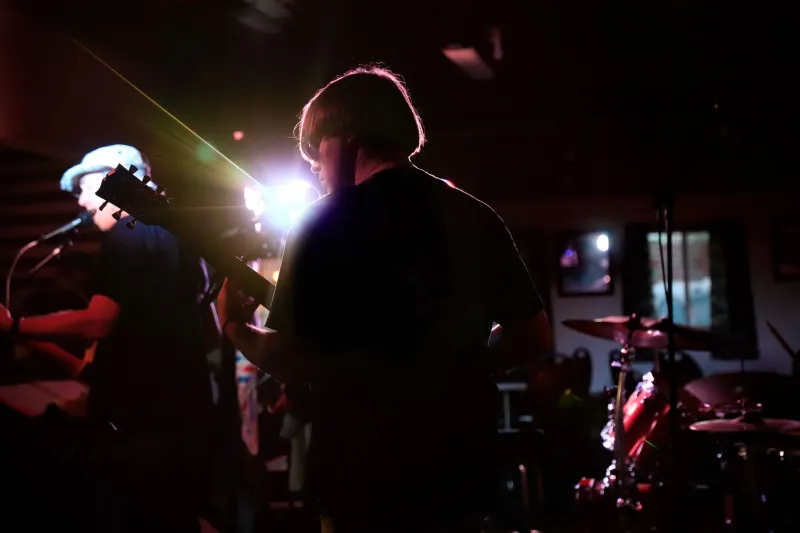
In Chicago, the Empty Bottle has been a cornerstone of the city's indie scene since 1992. It's a proper venue now, but it still carries the spirit of a neighborhood bar where anything might happen on any given Tuesday. Bands like Wilco, Modest Mouse, and Arcade Fire all played the room before they were household names in indie circles.
Down in Athens, Georgia — a college town that punched so far above its weight it became genuinely legendary — the 40 Watt Club has been running in various forms since 1978. R.E.M., the B-52's, and Widespread Panic all came up through its doors. Athens proved that you didn't need to be in New York or Los Angeles to build something real. You just needed a room, an audience that cared, and bands willing to keep showing up.
"Athens was proof of concept for every mid-size city that came after it," says a longtime music journalist who covers the Southern indie scene. "If it could happen there, it could happen anywhere. And it did."
How the Room Shapes the Music — and the Merch
Here's something that doesn't get talked about enough: the physical space of a venue directly influences the aesthetic output of the bands that play it. When you're playing a 100-person room, you don't design merch for a stadium. Your visuals are intimate, specific, almost conspiratorial. They're meant for the people in the room, not a mass audience.
That's why so much of the best underground merch has a handmade, insider-coded quality. A shirt that references a local venue, a lyric that only hardcore fans know, a graphic that looks like it was pulled from a zine — these aren't accidents. They're the natural output of a scene that values community over commerce.
Venue owners have long understood this connection. Many of the most beloved DIY spaces started selling hand-screened shirts and posters not just as a revenue stream, but as a way of cementing the identity of the space itself. A shirt from the Smell in Los Angeles or the Bottleneck in Lawrence, Kansas isn't just clothing — it's a membership card, a declaration of belonging.
The Scene Is Still Alive (It Just Moved Around)
It would be easy to write a eulogy for the underground venue — and plenty of people have, especially in the wake of the pandemic years, which shuttered countless small rooms across the country. But the honest story is more complicated.
Yes, rising rents and noise ordinances have killed a lot of beloved spaces. But new ones keep appearing. In cities like Philadelphia, Detroit, Kansas City, and Nashville, DIY scenes are actively thriving, often operating in the same semi-legal, word-of-mouth gray zones that the original basement shows did. The formats have evolved — some of the most exciting underground shows right now happen in art galleries, record stores, and pop-up spaces — but the ethos is identical.
"The scene doesn't die, it just finds a new address," says one Chicago-based promoter who books shows in everything from traditional clubs to converted industrial spaces. "As long as there are kids who want to hear something different, someone will find a room to put it in."
Wearing the Scene
At B&D Store, we think about this history a lot. The merch we carry isn't just product — it's the continuation of a tradition that started in those sticky-floored rooms. Every tee, every hoodie, every patch-covered jacket connects back to that original underground impulse: the need to signal that you were there, that you heard something that changed you, that you belong to something bigger than yourself.
The venues may change. The bands rotate. But the culture they created — scrappy, passionate, visually distinctive, and fiercely community-driven — keeps shaping what we wear and who we are.
Next time you pull on a band shirt, think about the room where that band first played to 40 people who lost their minds. That energy is still in the fabric. It always will be.